

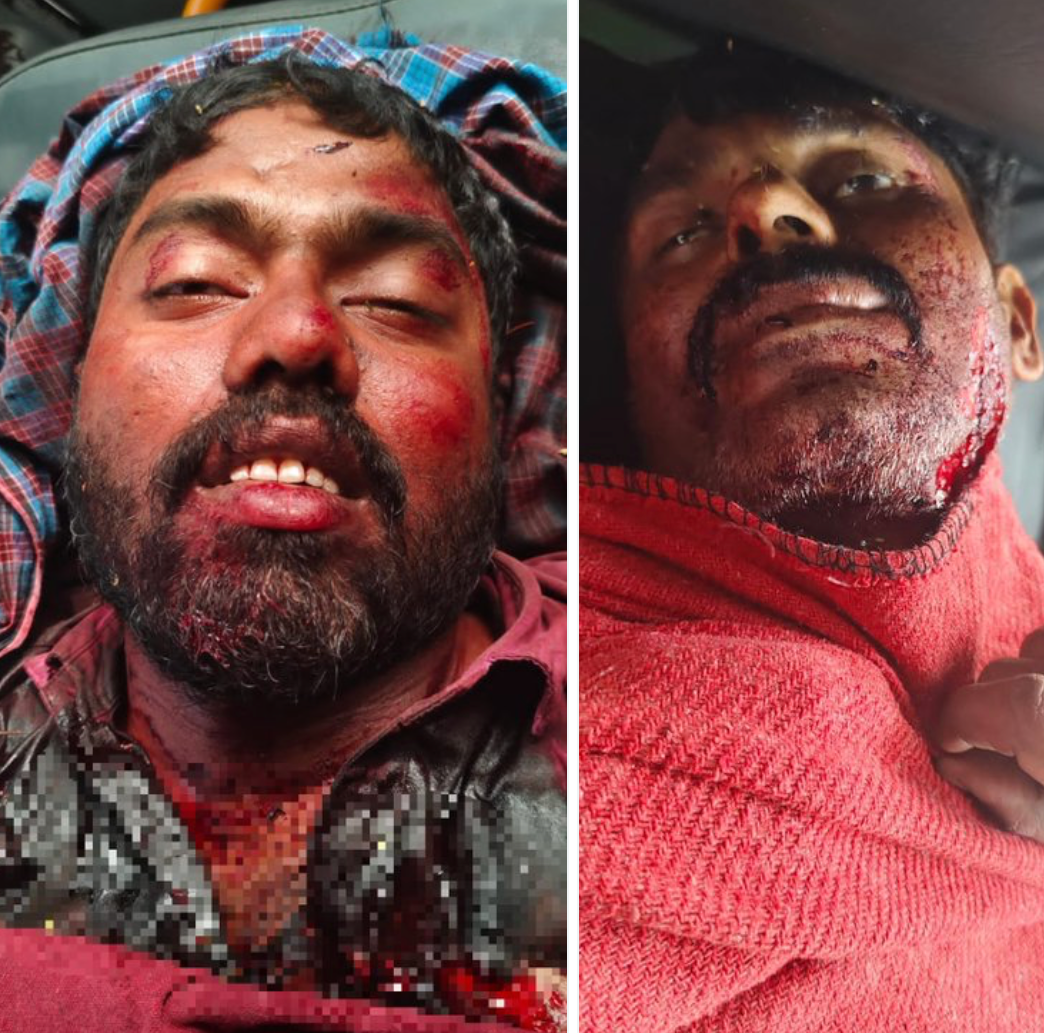
The killing of three Tamil-origin men in a forest area of Karnataka has triggered a political and legal controversy, with the Karnataka Forest Department maintaining that its personnel opened fire during an anti-poaching operation, while the victims’ families and political parties in Tamil Nadu dispute the allegation and say the men were farmers who had entered the forest in search of missing cattle.
The incident took place in the early hours of August 15 near Mariya Mangala in the Cauvery Wildlife Sanctuary in Chamarajanagar district. The three deceased have been identified in reports as Anthony Sami, John Rose Peter and Sebastian David Kumar. A fourth man, Mahim Das, reportedly escaped and was subsequently taken to hospital with injuries. The victims were residents of villages in and around Hanur taluk and were originally from Tamil Nadu.
What happened in the forest?
There are currently two sharply different accounts of what happened.
According to the Karnataka Forest Department, its personnel were conducting an anti-poaching patrol after receiving information about suspected hunters operating inside the Cauvery Wildlife Sanctuary. Forest officials said they encountered the group at about 5 a.m. on August 15 and alleged that the men were carrying unlicensed firearms and bags containing deer meat.
The officials’ version is that the suspected poachers opened fire first. The forest personnel, fearing for their lives, then returned fire in self-defence. One forest official was also reportedly injured. Karnataka officials have said that firearms and bags containing suspected wild-animal meat were recovered from the spot.
That account, however, has not been established as fact. The circumstances of the shooting are now the subject of an inquiry, including the crucial question of who fired first and whether the forest personnel’s use of firearms was justified.
Karnataka Chief Minister D.K. Shivakumar has ordered a magisterial inquiry into the incident. Forest Minister Ramalinga Reddy has also said that the government would act on the findings of the inquiry and that action would be taken against officials if wrongdoing is established.
Families reject the poaching allegation
The families of the deceased have given a very different account.
According to the complaint filed by Lourdu Mary, the wife of Anthony Sami, her husband and the other men had entered the forest in search of missing cattle. The complaint says that the men were fired upon by forest officials.
Hanur police subsequently registered an FIR against forest officials under Section 103(1) of the Bharatiya Nyaya Sanhita, the provision dealing with punishment for murder. The case was registered on the basis of the complaint and forwarded to the jurisdictional court.
The incident has acquired an additional political dimension because the three men were Tamil-origin residents of the Karnataka-Tamil Nadu border region.
Tamil Nadu political parties have strongly questioned the Karnataka Forest Department’s account. The CPI’s Tamil Nadu unit said the deceased were farmers accustomed to taking cattle into the forest and alleged that they had been wrongly portrayed as hunters. The party called for the arrest and dismissal of the officials responsible and sought an independent investigation. DMK MP Kanimozhi Karunanidhi also called for a transparent investigation, while other Tamil Nadu political leaders have demanded stronger action.
Tamil Nadu Chief Minister C. Joseph Vijay has described the deaths as deeply disturbing and said the explanation offered by the Karnataka Forest Department was unacceptable. He has called for a high-level inquiry and appropriate action against anyone found responsible. He has also urged Karnataka to provide assistance to the victims’ families.
From Karnataka’s perspective, the Cauvery Wildlife Sanctuary is not an ordinary stretch of forest. It is a large protected landscape extending across parts of Ramanagara, Chamarajanagar and Mandya districts and forms an important habitat for elephants and other wildlife. It is also part of the wider ecological landscape connecting forests along the Karnataka-Tamil Nadu border.
The region has a long history of wildlife crime and armed encounters involving alleged poachers. The forests around the Karnataka-Tamil Nadu border were once associated with Veerappan’s elephant-ivory and sandalwood-smuggling network, and poaching remains a continuing concern.